Two-Tier Agentic Analytics Where MCP Absorbs Query Risk Before It Reaches Supabase
Routing agents through governed metrics keeps production Postgres out of reach.
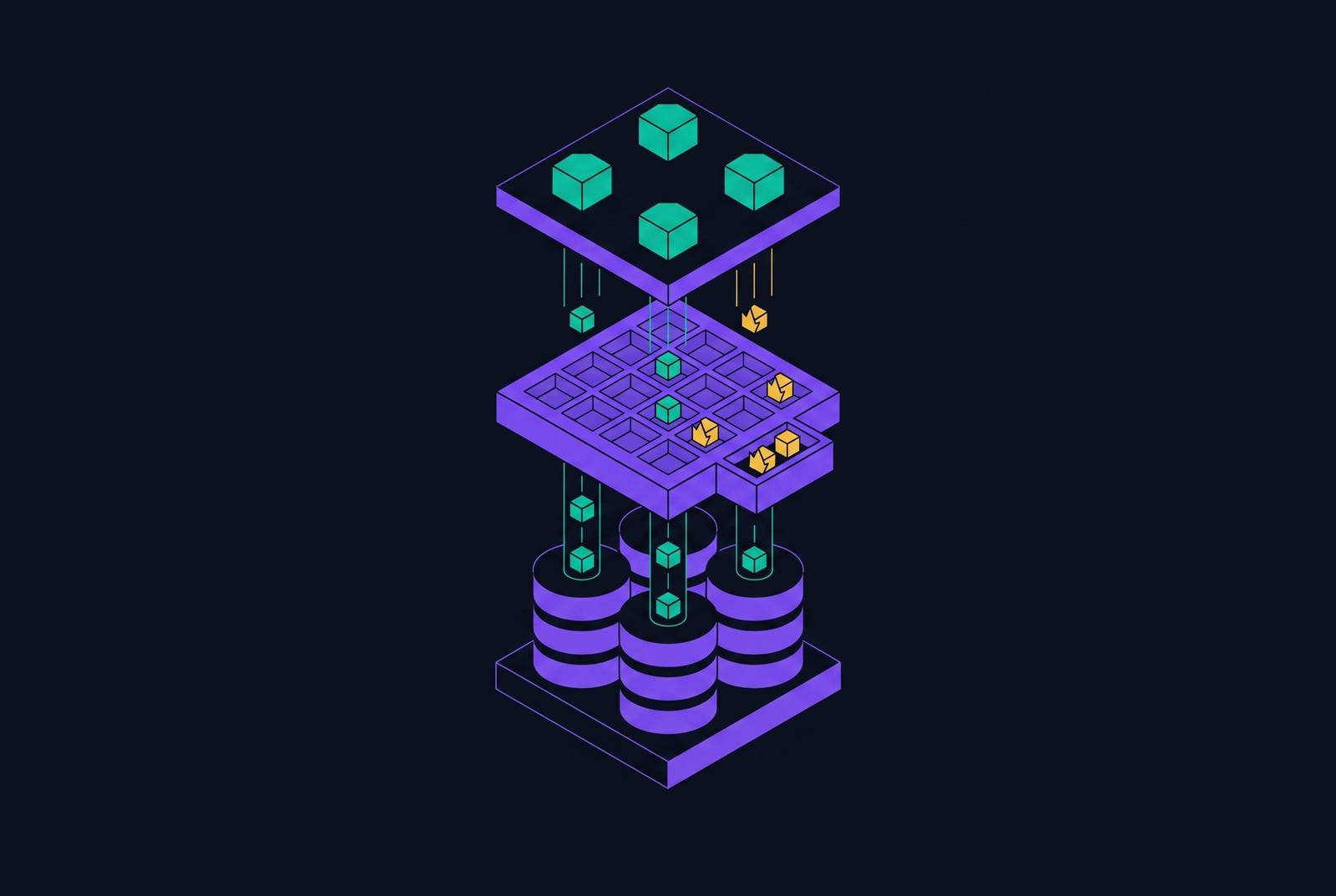
To govern data access for AI agents on Supabase, a two-tier architecture needs an MCP server that exposes approved metrics and an isolated analytical layer that answers requests without giving agents access to production Postgres. The MCP server intercepts tool calls, while the analytical layer gives answers that are pre-calculated and use the same definitions each time. Read-only database access alone cannot keep that boundary in place because it still lets sensitive rows enter the model’s context.
Why AI agents querying Supabase directly is an unsolved security problem
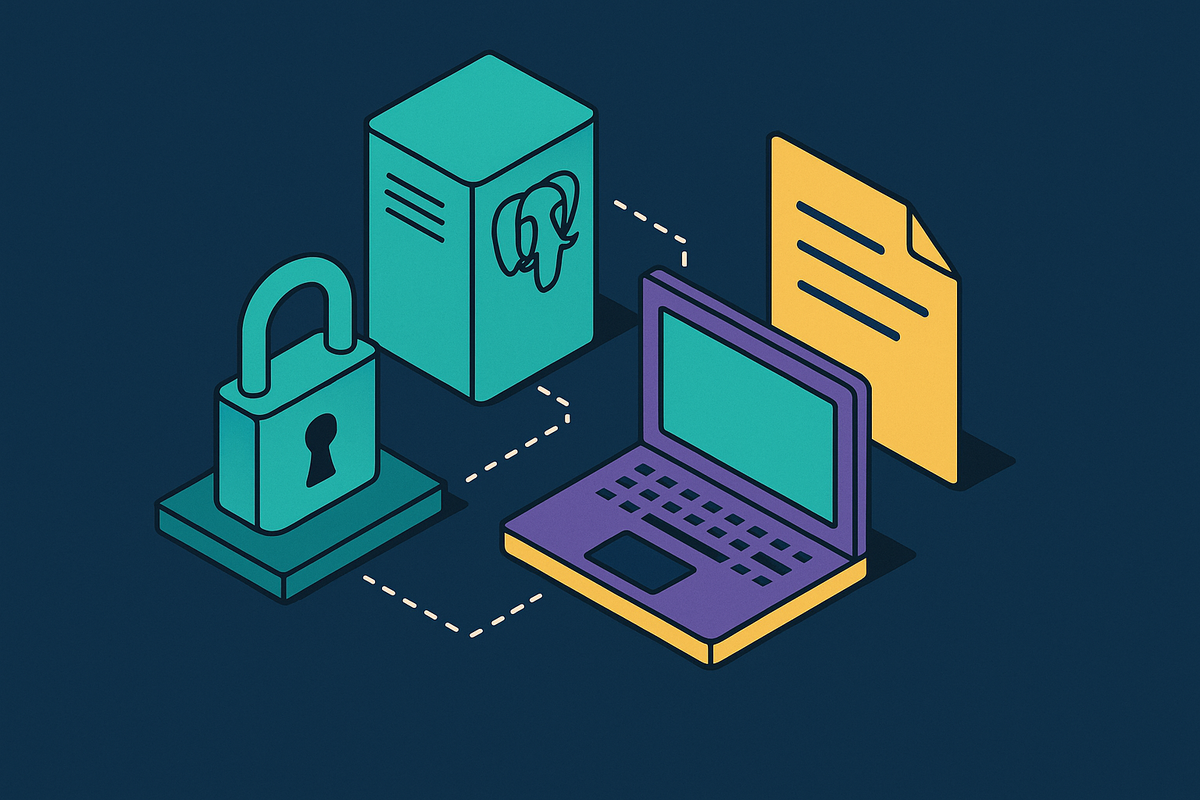
A founder or small team first connecting an AI agent to Supabase has an intuitive starting point, which is to give the agent a tool that can query the project. That connection makes application data immediately useful to the agent. It also grants more authority than analytics requires. The Supabase MCP server is not read-only by default and can execute SQL, apply migrations, and deploy Edge Functions. The risk begins with the reachable database and available tools.
A support ticket, comment, or profile field can contain instructions that the model follows after a query returns. Supabase’s documentation describes mitigation instructions wrapped around SQL results but acknowledges that the protection is not foolproof. Data can therefore become an instruction source. Wiz Research describes the combination of untrusted input, sensitive data access, and the ability to act as the “lethal trifecta,” which direct agent access to production Postgres brings together.
The resulting exposure is not limited to database changes. An agent that reads private rows and shows them in response text has already leaked data, even if every query was read-only. MCP-DPT research locates this problem across a distributed, multi-party context and tool supply chain. The application is no longer the whole perimeter. A secure application interface does not govern every route through which an agent can encounter instructions, retrieve sensitive information, or pass that information onward.
What MCP actually does inside an agentic system, and where its trust boundaries sit
Model Context Protocol standardizes how agents discover tools, send requests to servers, and receive structured responses. The protocol leaves authentication, authorization, and transport security to the implementations of its hosts, clients, and servers. Putting MCP between a model and Supabase thus gives teams a place to enforce policy, but they still have to set that policy.
Tool discovery makes that distinction especially important. Unlike a static API, MCP gives the model natural-language tool descriptions that enter its context and shape its choice of tools and call parameters. MCP-DPT calls these “pre-execution artifacts” because adversarial influence can begin before a tool runs. Trust therefore starts before the query arrives. Tool description poisoning, indirect prompt injection, parasitic tool chaining, and dynamic trust violations illustrate why validating only the eventual database operation leaves other parts of the workflow exposed.
Wiz Research documents the September 2025 Postmark MCP incident as a supply-chain example of this problem. A copycat email server package on npm initially behaved legitimately, then introduced a malicious version that silently sent copies of agent-sent emails to an attacker-controlled domain. An installation-time review was not a durable guarantee. The AIUC-1 Q2 2026 update, effective April 15, 2026, added 23 controls covering areas including MCP and agent-to-agent protocol security, agent identity and access management, and third-party risk monitoring.
Why making an MCP server read-only is necessary but not the whole answer
The Supabase MCP server’s --read-only flag executes SQL queries as a read-only Postgres user and disables mutating database tools. This is a meaningful reduction in authority. However, the CLI flag applies only to database tools. Treating it as a complete security boundary confuses limits on what operations can run with limits on what information can get out.
Context leakage remains possible because reading is enough to move sensitive data into the model’s working context. Injection can then influence what the model includes in its response or passes to another tool. No database modification is required for that failure. Runtime discovery can also expose data when a misconfigured server shows tables or columns that the team never meant agents to reach. A read-only query against an unintended dataset is still an unauthorized disclosure.
Read-only access also leaves the meaning of results unresolved. If three parts of a product calculate conversion differently, an agent querying raw tables inherits the disagreement. Permissions cannot choose the correct business definition. MCP-DPT identifies host orchestration, transport, and supply-chain defenses as persistent gaps where tool-centric protections do not fully govern what an agent can reach. If read-only configuration is insufficient, what does a structurally sound boundary actually look like?
How do AI agents query Supabase data without direct database access through a two-tier architecture?
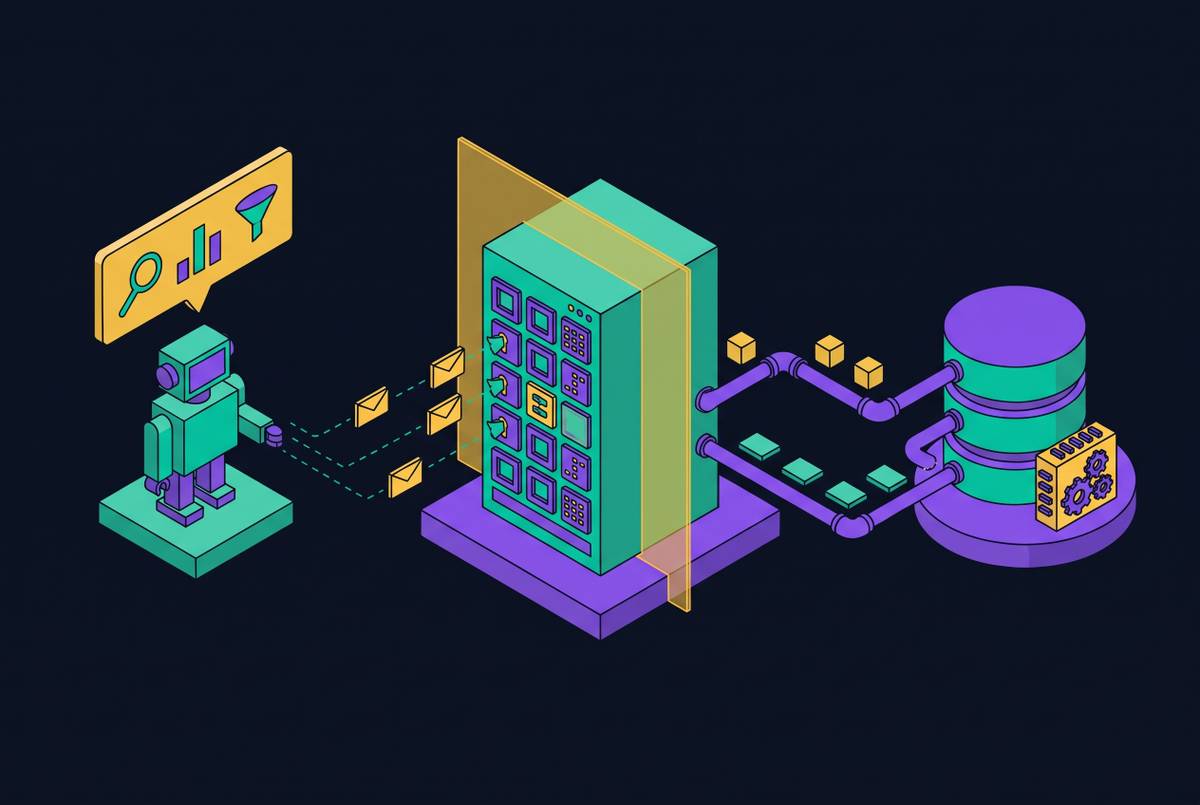
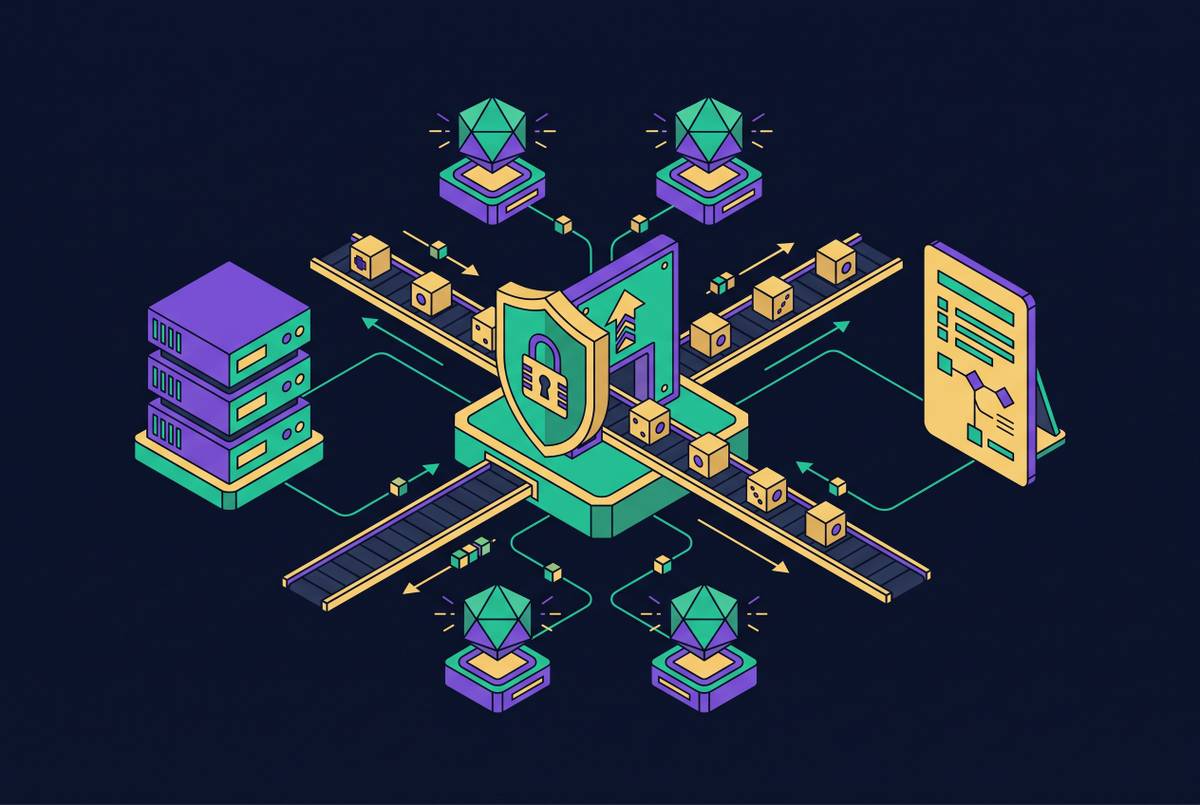
The first tier is an MCP server that receives every agent tool call before any database is touched. It exposes only named, versioned metrics with locked definitions and keeps raw production tables out of reach. Requests resolve against those governed contracts. The server enforces read-only access to approved datasets and validates tool descriptions before they enter model context, placing a defense at the point where descriptions can influence behavior. Its responsibility is to govern the interaction, rather than merely forward SQL.
The second tier is the analytical layer that answers those approved requests. It stores pre-modeled datasets as governed Parquet files and uses DuckDB to query them, keeping agent execution away from the OLTP engine. Metrics are calculated ahead of time. ARR, churn, and CAC become named, versioned contracts consumed consistently by agents, dashboards, and applications. The analytical layer reads from Postgres, but that source connection is distinct from the surface exposed to agents.
A read-only setting can change in a later deployment, whereas an agent cannot invoke a production database tool that the architecture does not expose. Parasitic tool chaining cannot redirect an agent into an unapproved production operation through a server that exposes only the governed metric surface. That containment depends on production access remaining outside the agent’s reachable tools.
ADR system research identifies limited observability as a persistent enterprise agentic security challenge because endpoint tools see file writes but not agent reasoning, prompts, or the causal chains between intent and execution. Interception places control before the consequential operation. AIUC-1’s runtime containment requirements reinforce that direction, although structural isolation is one part of the broader control set alongside authentication, transport protection, and supply-chain governance.
What a semantic layer adds that connectivity alone cannot provide
A successful connection establishes that an agent can retrieve data. Teams may mean different business events when they use terms such as conversion, active user, or churned account. Faster access does not reconcile those definitions. Without a semantic layer, the model must infer which tables, fields, and calculations express the intended metric. A technically valid query can therefore produce an answer that misrepresents the intended metric.
A governed metric contract replaces that inference with an agreed definition. Approved field meanings and named metrics tell the agent what an answer represents before it retrieves the result. Pre-calculation narrows the task further. Instead of constructing an ad-hoc aggregation against raw rows, the agent retrieves a named answer from a modeled dataset. This removes the class of aggregation errors caused by model-generated SQL misreading schema intent, rather than relying on the model to make the same interpretation correctly each time.
When dashboards and applications consume the same pre-calculated metrics, they do not independently reconstruct the business logic that produced the answer. The definition has one governed home. This is the headless analytics pattern applied to agentic workloads, much as a headless CMS separates content infrastructure from presentation. The consuming surface can be an agent, a BI tool, or a downstream application without becoming the place where the metric is defined.
That separation changes the role of MCP in analytics. Connectivity remains its function, but the connected surface becomes a set of business answers. The model still handles the user’s question. It no longer needs to invent the calculation behind every response, and a dashboard does not need a parallel implementation of that calculation.
How Supabase Postgres behaves under analytical load, and why the production database should not absorb it
Supabase Postgres serves transactional workloads built around lookups, inserts, and updates. Analytical aggregations scan much larger portions of the data and compete with live traffic for CPU and memory on the same engine. Columnar engines exist for this scan-heavy workload. DuckDB over Parquet serves a different role from the operational database. Moving execution changes which workloads compete for resources as well as what the agent can reach.
Supabase’s documentation recommends read replicas for complex analytical queries while reserving the primary for user-facing operations. The recommendation separates workloads before they interfere. Supabase Pipelines, moved to Public Alpha with BigQuery support, illustrates the same direction by moving data toward analytical destinations. Its automatic schema change replication detects and applies column additions, removals, renames, and changes to nullability and defaults. That infrastructure supports data leaving Postgres for analysis rather than making the primary answer every analytical request.
Teams still need to monitor the system when those responsibilities are split. Supabase’s Metrics API exposes Postgres performance and health metrics in Prometheus exposition format, while pg_stat_statements records query mean time, total time, and call count. Those measurements make query costs visible. Supabase’s one-click Grafana Cloud integration, released mid-2026, makes pre-built dashboards and alerting available to every project, including the free tier. The integration lowers the effort required to observe production behavior, but instrumentation only helps when someone watches it.
For teams deploying agents, the operational lesson is to establish p50/p95 latency visibility from day one. Without it, analytical pressure can remain unnoticed until it affects the application. Isolation assigns analytical execution to a layer where agent requests do not compete directly with production transactions. The reason to keep complex analytics off the primary is also the reason to keep agents from querying production Postgres directly.
What the governed MCP layer looks like in practice for a Supabase team deploying agents
A Supabase team implementing this pattern gives agents one MCP endpoint backed by governed analytical datasets. Named, versioned metrics such as ARR, active users, and churn are pre-calculated, stored as Parquet files, and queried through DuckDB. Production credentials stay outside agent configuration. Tool definitions are locked and versioned so that runtime discovery shows only the approved metric surface and keeps the underlying raw schema out of view. The endpoint becomes the only entry point for agent analytics.
The exclusions are as important as the exposed tools. Agents receive no production connection string, connection pooler access, or raw SQL execution surface against Supabase. Unmapped tables and columns remain undiscoverable through that endpoint. Write capability is absent from the agent-facing design rather than disabled by a setting on an otherwise powerful database tool. The practical test is whether an agent can reach production at all.
For server selection, the criteria therefore extend beyond Supabase connectivity. The relevant capabilities are governed dataset access, named and versioned metric contracts, validated tool definitions, and an execution path isolated from production Postgres. A generic read-only SQL connector is a different offering. It can restrict database mutations without supplying shared business definitions or removing raw production data from the agent’s reach. The supplied evidence supports this architectural comparison.
In the described pattern, the team has no separate ETL pipeline to maintain, no Supabase schema changes to make, and no separate data warehouse to provision. Agents, dashboards, Slack reports, and inbox digests consume the same pre-calculated numbers. Delivery can move beyond the dashboard itself. Metrics reach the inbox or Slack without each consumer rebuilding the query or remembering to retrieve the result. Postgres remains the operational home, the governed layer becomes the analytical home, and MCP is the only door agents can open.