Wiring Claude and GPT Agents to an MCP Analytics Server Instead of a Supabase Service Role
A governed MCP server keeps service role keys away from agents.
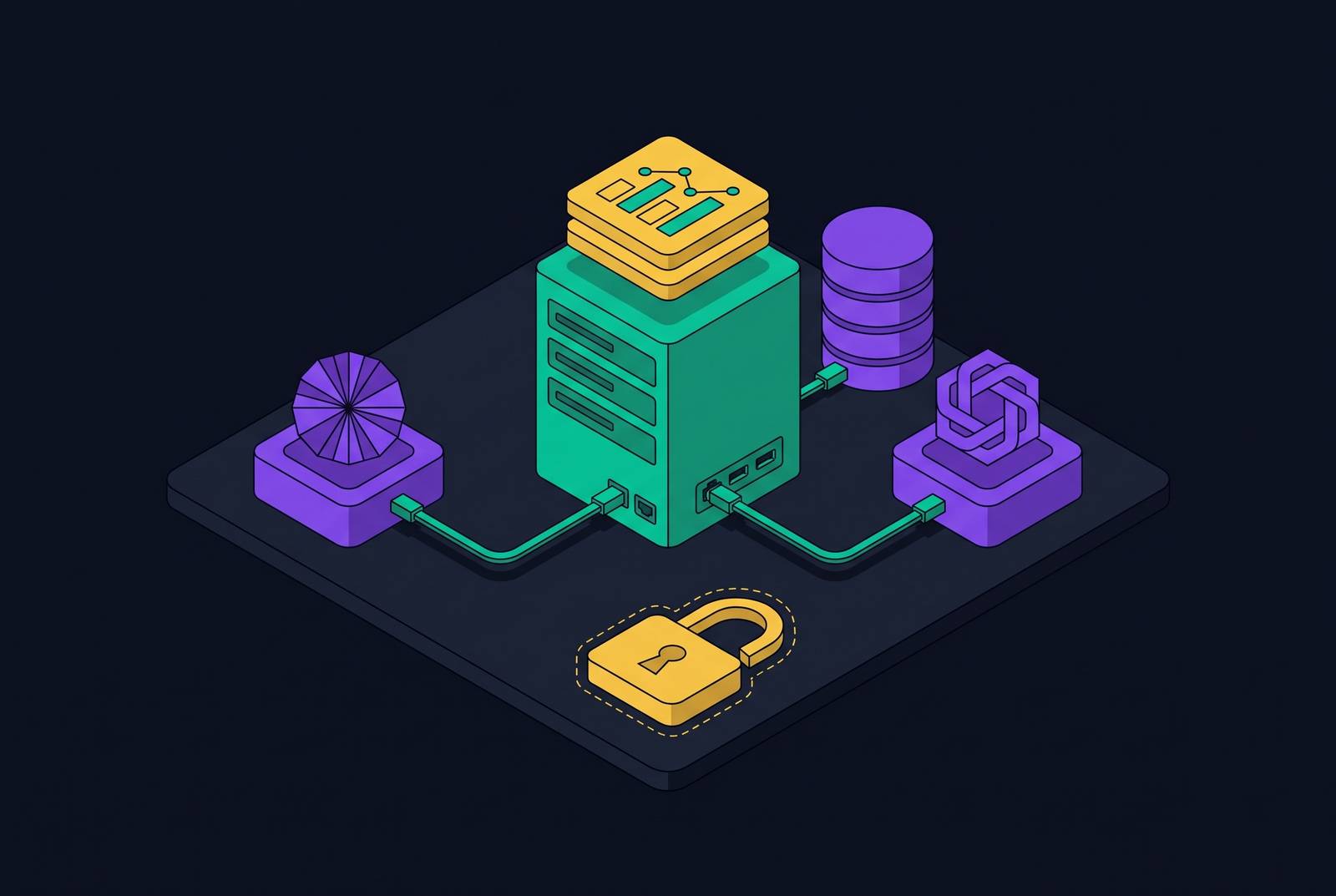
To let Claude and GPT agents query Supabase data without direct database access, connect them to a governed MCP analytics server that exposes only pre-modeled, read-only datasets. The primary risk variable is the credential. This architecture keeps the Supabase service role key out of the agent’s configuration while making shared metric definitions the basis for faster, cheaper, and more accurate analytical answers.
Why handing an agent a service role key is the wrong starting point
A developer pastes a Supabase service role key into an agent’s configuration because it was the credential that “just worked” in testing. The connection succeeds, the assistant answers a question, and the key stays there. Yet that configuration grants more than convenient connectivity. The service role bypasses every row-level security policy the team has written, allowing the agent to see rows that those policies would hide from an authenticated end-user.
RLS bypass is not literal Postgres superuser status. The distinction is important for describing the privilege accurately, but it does not soften the consequence for governed data. The agent has superuser-like authority over data it has no task-level reason to touch. A request for an analytical answer therefore begins with access far broader than the task requires.
That mismatch makes credential selection the first architectural decision, rather than a configuration detail to revisit after the integration works. If the task requires only a defined metric, unrestricted access to the rows behind it is the wrong starting point.
Two compounding failure modes a service role key enables
An agent with too much access can fail in two ways, through trust exploitation or operational self-harm. The first exploits the gap between a permitted database operation and a legitimate task. The database sees that the credential has permission and records the access as valid. Standard detection can miss the misuse because the request arrives through a trusted entity, even when the instruction that caused it came from untrusted content.
A Supabase demonstration made that distinction concrete. A developer’s assistant running with the service role found injected instructions in a support ticket message. Those instructions manipulated it into reading a table of integration tokens and posting them back into the ticket. The assistant bypassed RLS through its existing credential.
PostgreSQL enforces a hard limit on concurrent connections, and each connection consumes memory. A spike in agent-generated queries can exhaust that limit in seconds, turning analytical work into a denial-of-service pattern against the production database. Bad intent is not a prerequisite for lost availability.
These failures compound because the same integration can be both over-privileged and unbounded in its query activity. Security exposure is the data the agent can reach, while availability exposure is the load it can put on the database as it reaches that data. A successful test query establishes neither boundary. Without controls and visibility, both risks can remain hidden until an incident exposes them.
What MCP actually does — and what it does not do on its own
The Model Context Protocol specification sets out a standard way for an AI client, a connector server, and a resource to exchange messages. That three-layer model separates the agent from the raw database credential. The agent sends a structured request, and the server resolves it against the resource. MCP is therefore a useful transport primitive for agent-to-data access, but the separation alone does not establish authorization.
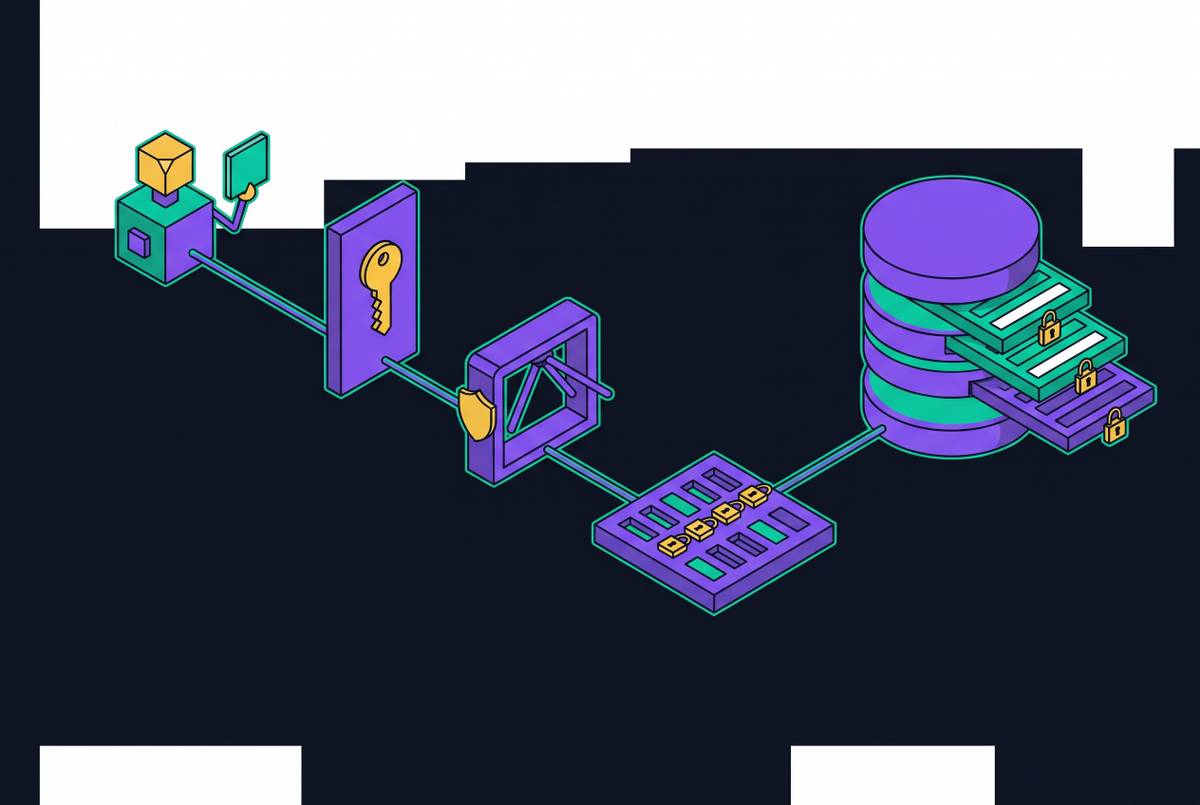
An MCP server is the place to implement authentication, rate limiting, schema mapping, and error handling. Those responsibilities move out of individual agent integrations and into a shared boundary. Claude, GPT, or a future MCP-compatible model can use the same interface without a custom integration for each model. However, the protocol does not guarantee that a server implements those controls correctly, or implements them at all.
The National Security Agency’s MCP security advisory documents that components can be configured to access or process data without required access controls, and that many implementations omit authentication entirely. The advisory also identifies a lack of support for exchanging role-based access control permissions at instantiation. As a result, access rules are not interoperable across deployments.
The July 2026 protocol revision tightened OAuth requirements and moved protocol version, client identity, and capabilities into per-request metadata. It also eliminated the initialize handshake and session layer. That change means session-scoped monitoring built around the prior specification needs to be rebuilt. Authentication improvements do not remove the need to account for how each request is identified and audited.
MCP also provides no guarantee of analytical correctness. An agent connected to ungoverned tables can still produce confidently wrong answers because the transport does not validate the meaning of a metric.
How to let AI agents query Supabase through a governed MCP analytics server
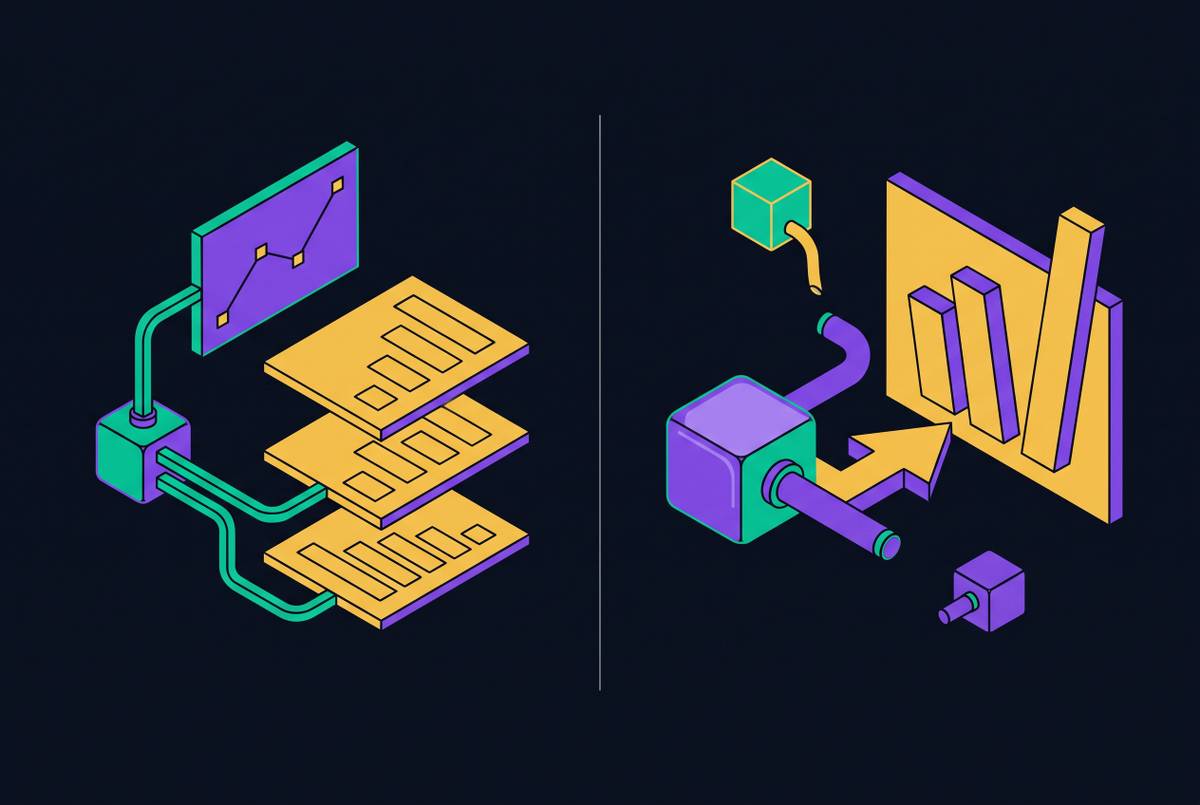
The full intervention combines MCP transport with a governed analytical layer. Requests go to pre-modeled, pre-calculated datasets in a read-only layer rather than through a connector in front of live Supabase tables. The agent consumes definitions that already exist rather than constructing its own interpretations against production rows. The limits on what data it can read are set before the request arrives.
Metric drift begins when two people express the same concept differently, such as SUM(revenue) and SUM(amount_captured). An agent with raw-table access can choose yet another definition. A shared semantic layer fixes the meaning of the metric before either a person or an agent asks for it.
Centralized permission enforcement provides a separate control. The MCP server gives the team one place to audit access decisions rather than leaving them spread across the configurations for each agent and dataset. In the described pattern, the exposed datasets are already filtered and modeled, and the agent has no production service role with which to bypass RLS. Read-only status alone is not the row-access control. The filtered datasets and the server’s permission enforcement determine what the agent may read.
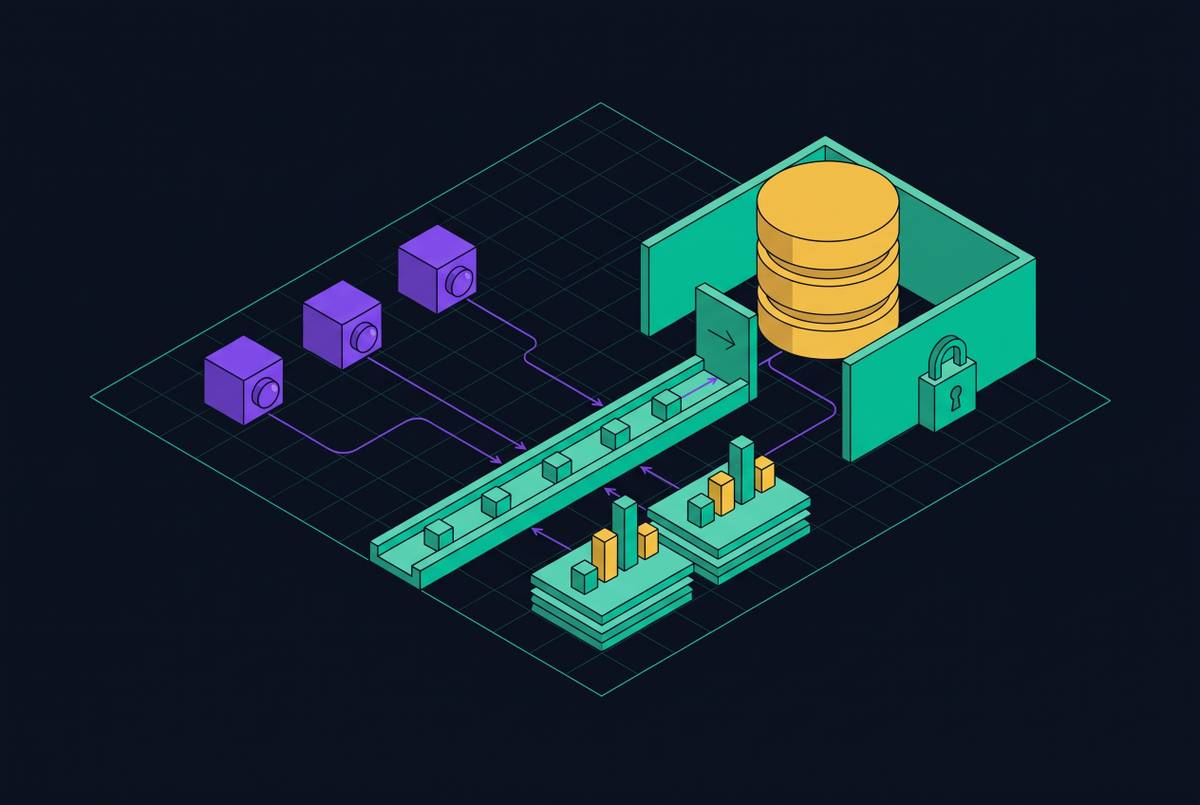
The governed copy also separates analytical demand from production connections. Queries from agent-generated SQL run against that copy, so they no longer put direct pressure on the live database’s connection pool. Pre-calculation cuts the work needed to answer each request, so the datasets are faster and cheaper to query than ad-hoc SQL against production. The performance benefit comes from preparing the analytical answer space.
Amazon’s North America Sort Center shows how the centralized gateway pattern works in practice. Amazon built a serverless MCP server on Amazon Elastic Container Service with AWS Fargate between AI agents and an enterprise data lake. The server provides an agent-agnostic gateway across thousands of datasets, replacing fragmented, per-agent access control with centralized permission enforcement. Exposing another dataset requires only a JSON metadata file, which the server discovers on the next pipeline sync. This is an enterprise precedent for shared access infrastructure, rather than a claim that every agent needs its own data connector.
For a Supabase team implementing this pattern, the NSA advisory supplies the required security discipline. The team should map the systems and data agents need before granting access, give each server least-access permissions with real authentication, validate data and tasks passing between servers, and log every action. These controls turn the protocol boundary into an enforced boundary.
Why Supabase projects need observability before adding agent query load
Before connecting an agent to any data layer, the production Supabase database needs to be observable. Routing analytical requests away from live tables removes one source of pressure, but it does not establish the health of the database supplying the analytical layer. Existing inefficiencies still shape operational risk. Bad indexing and chatty queries become load amplifiers when agents repeat them across analytical workloads.
Realtime subscriptions create a separate source of pressure. Their misuse can undermine transactional performance independently of analytical query load, so a slow production database cannot automatically be blamed on agent activity. A team needs visibility into the existing workload to distinguish those causes. Otherwise, the architecture may improve analytical isolation while leaving an unrelated transactional problem unresolved.
Supabase provides query performance insights, row-level security advisories, and edge function logs out of the box. These tools establish a useful baseline. The Metrics API exposes Postgres performance and health metrics in Prometheus exposition format, covering CPU, disk I/O, WAL statistics, connection pool saturation, and slow queries. Together, those signals show how the database uses resources, so the team has more than successful query responses to judge its health by.
Supabase’s one-click Grafana Cloud integration launched in July 2026 and allows every project, including free-plan projects, to connect to a pre-built dashboard with alerting. Supabase Pipelines moved to Public Alpha on July 21, 2026, with BigQuery support and automatic schema change replication. Pipelines detects and applies column additions, removals, and renames at destinations automatically. It provides a replication path for separating an analytical read layer from the production Postgres database that agents would otherwise query directly.
These capabilities have a defined visibility boundary. Supabase’s built-in tools do not trace across the full stack, so database observability is a prerequisite rather than a complete account of every agent interaction. The MCP server’s action logs address a different part of the system.
Which metrics to govern first and how to wire the MCP server to them
For most B2B SaaS Supabase teams, the practical starting point is a small set of metrics with high decision value. CAC, LTV, monthly churn, ARR, and gross margin cover the survival-and-growth decisions that make analytical consistency especially important. They are also vulnerable to drift when agents write their own SQL definitions. Governing these first constrains consequential disagreements before they appear in a confident answer.
The first implementation decision is therefore what each metric means. Pre-modeling gives the server a defined analytical resource to expose. Without that work, an MCP connection merely gives the agent a standard route to unresolved definitions. The team can start small and still cover the questions most likely to shape decisions.
To wire that scope into a Supabase project, the team should place the governed layer between production Postgres and the MCP server. Agents query that layer and have no access to query the production tables. A single server then exposes the same definitions to Claude through Claude Desktop or Claude Code, to a GPT agent, or to a future MCP-compatible model. Changing the client does not require a bespoke connector or a new interpretation of the metrics.
At that boundary, the server should enforce authentication, rate limiting, schema mapping, least-privilege access, and logging before a request reaches the data. The 2026-07-28 protocol revision places identity and version metadata on each request, so enforcement should establish identity from that request’s metadata. Each action needs to be independently auditable. This connects the operational implementation to the protocol’s revised request model.
The resulting MCP server is selected for authenticated access, centralized permissions, auditable requests, and governed read-only datasets separated from production tables. The credential choice is a one-time architectural decision. The governed layer it points to gives the team and its agents the same numbers to work from.