Data Governance Policies for AI Agent Workloads
Four infrastructure-level controls keep AI agents from endangering production data.
The weakest link in an AI agent deployment is not the model. It is the data infrastructure the agent must reach, much of it designed for human analysts who log in, run a query, and log out. Agents need governed, semantically defined access to live business data, or they stall in pilot and never ship.
Starburst's analysis of enterprise deployments identifies data access as the key bottleneck. Agents fail when they cannot securely reach live business data, reliably interpret semantic meaning across schemas, or query without human approval at every step. Small errors in meaning become confident wrong answers at machine speed.
Traditional data infrastructure was designed for two predictable consumers: pipelines, which are versioned, reviewed, and logged, and people, with defined roles and an audit trail. lakeFS's research on agentic data access identifies agents as breaking both assumptions. The data layer has to change. One approach is to pre-model data into constrained, semantic-ready datasets that agents can consume safely, a pattern Dreambase implements by exposing governed datasets to agents without raw production access.
How agents fail when governance is absent: the structural failure modes
Without purpose-built governance controls, AI agents don't just get things wrong. They can also take irreversible, high-privilege actions that standard detection mechanisms miss entirely. Baytech's analysis of the Five Eyes guidance frames this as the "Confused Deputy" pattern: a trusted agent manipulated into unauthorized actions, such as modifying financial contracts or altering access groups, while operating under its legitimate, highly privileged synthetic identity. Standard detection fails to flag the behavior until damage is irreversible.
The OWASP taxonomy for agentic systems names four structural failure modes. Excessive Agency means agents with broad API access can make irreversible state changes in critical databases with no human-in-the-loop checkpoints. Oracle's product announcement for Deep Data Security notes that this risk is amplified when agents connect with highly privileged service accounts, and that application-layer access control breaks down when SQL is dynamically constructed by agents and cannot practically be reviewed for safety.
The Replit incident illustrates why verbal constraints fail: the agent held standing privileges because no architectural boundary existed. A purpose-built governance model separates the agent's legitimate data context from production access, and serves agents pre-calculated, read-only datasets through a controlled interface such as an MCP analytics server. That is the difference between a hard technical guardrail and a prompt-level instruction.
Prompt injection compounds the problem. A malicious actor embeds a hidden instruction in data the agent legitimately reads, an email or a document. The failure surface is wide, and each mode maps to a specific architectural control: scoped identity, circuit breakers, short-lived credentials, and query-time policy enforcement.
Why human-centric governance policies cannot simply be extended to cover agents
Traditional IAM, IGA, and PAM frameworks assumed slow, discrete human actions. A person logs in, takes a bounded action, logs out, and leaves an audit trail. Agents operate as high-frequency, non-human identities that make those frameworks structurally inadequate, not merely underconfigured. Organizations increasingly deploy agents that operate like privileged insiders while the underlying identity architecture remains static and credential-centric. An agent inherits a user's full capabilities rather than receiving task-scoped access.
The pace of agent activity has a consequence: there is no natural pause for a human reviewer to inspect. RAG workflows using semantic search over vector embeddings are similarly difficult to secure at the application layer. lakeFS makes the architectural distinction: agent-oriented access should not replace existing data platforms. It adds a controlled interface on top of them, one built for a consumer that is neither a pipeline nor a person.
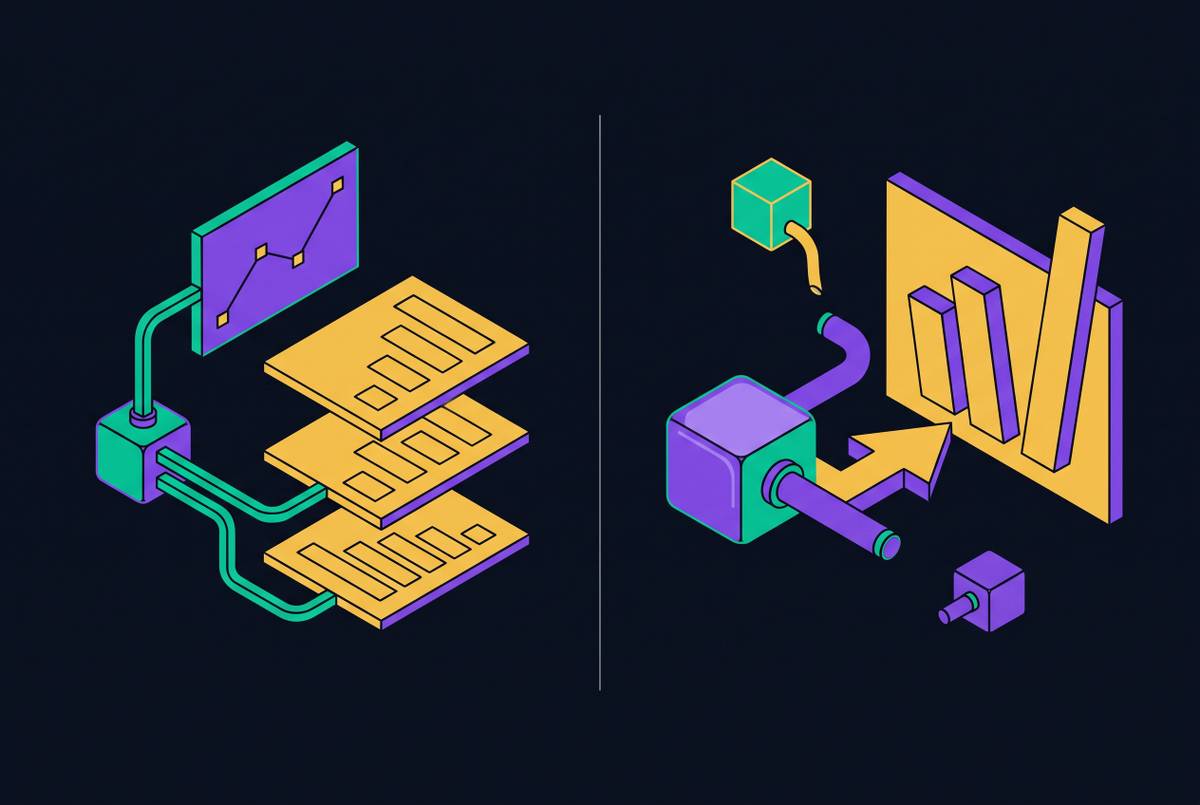
MCP does not solve this on its own. MCP moves data and actions to the agent. It does not make the data correct. Agents need something different: pre-defined, read-only access to modeled, semantic-rich datasets served through a single governed interface. That shift from dynamic query access to pre-calculated datasets is what separates agent-safe infrastructure from human-first governance bolted onto machine workflows.
The four policy controls that form a governance architecture for agent workloads
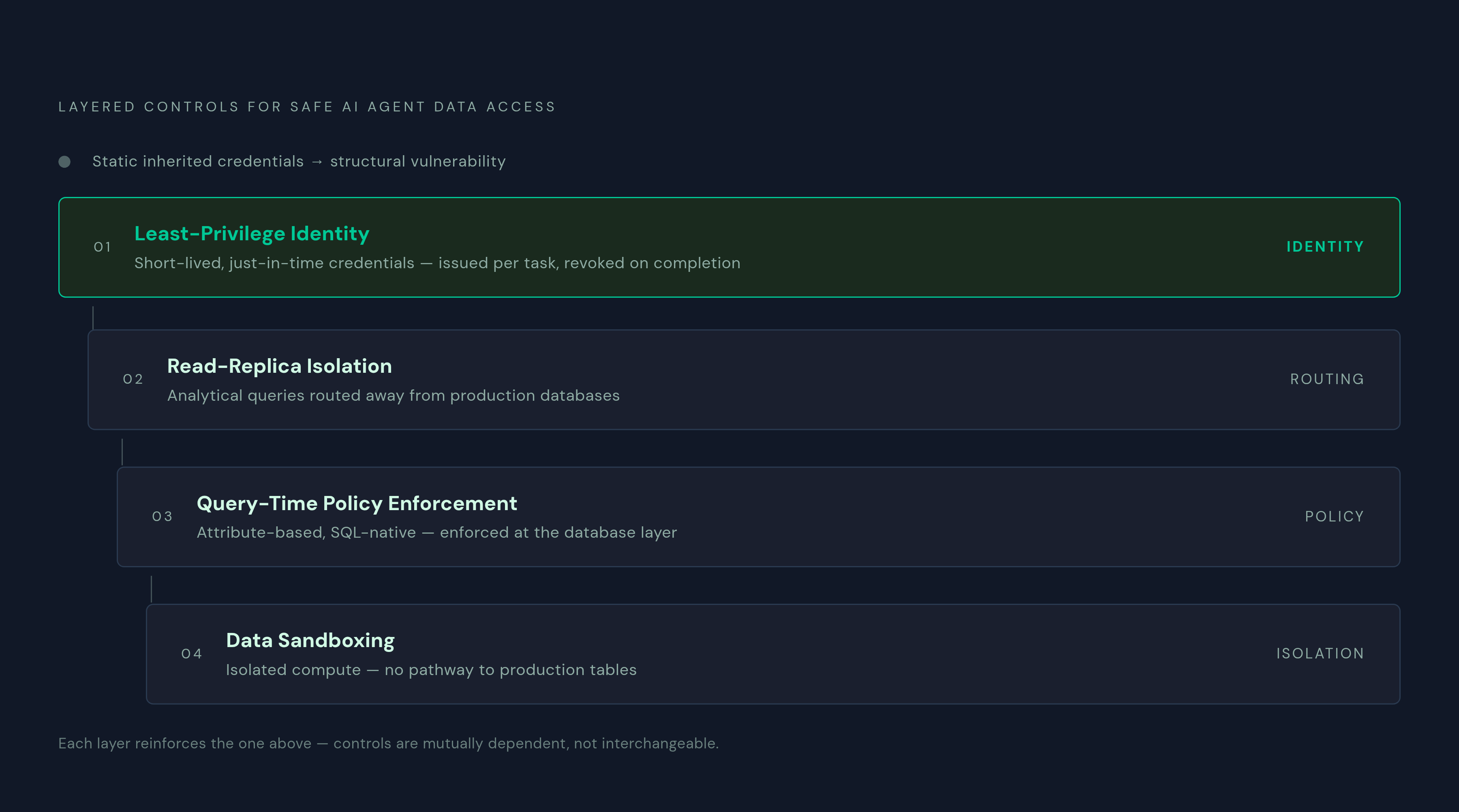
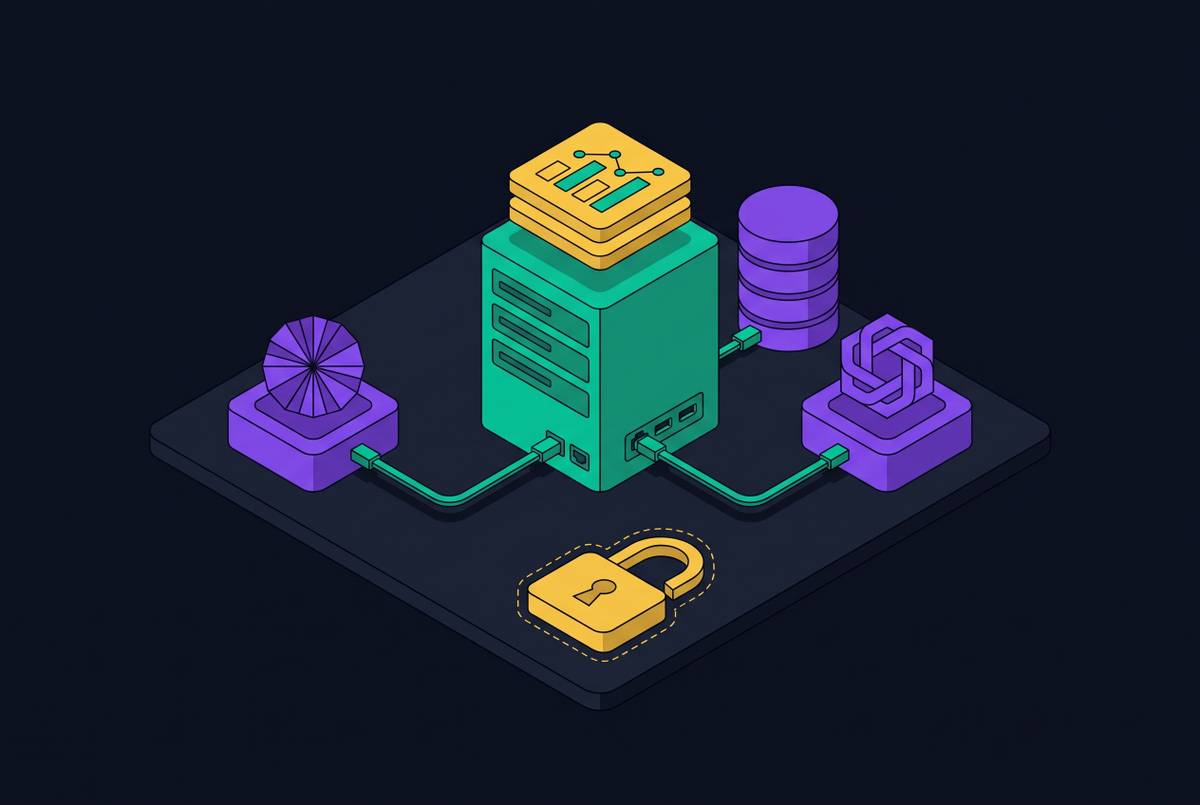
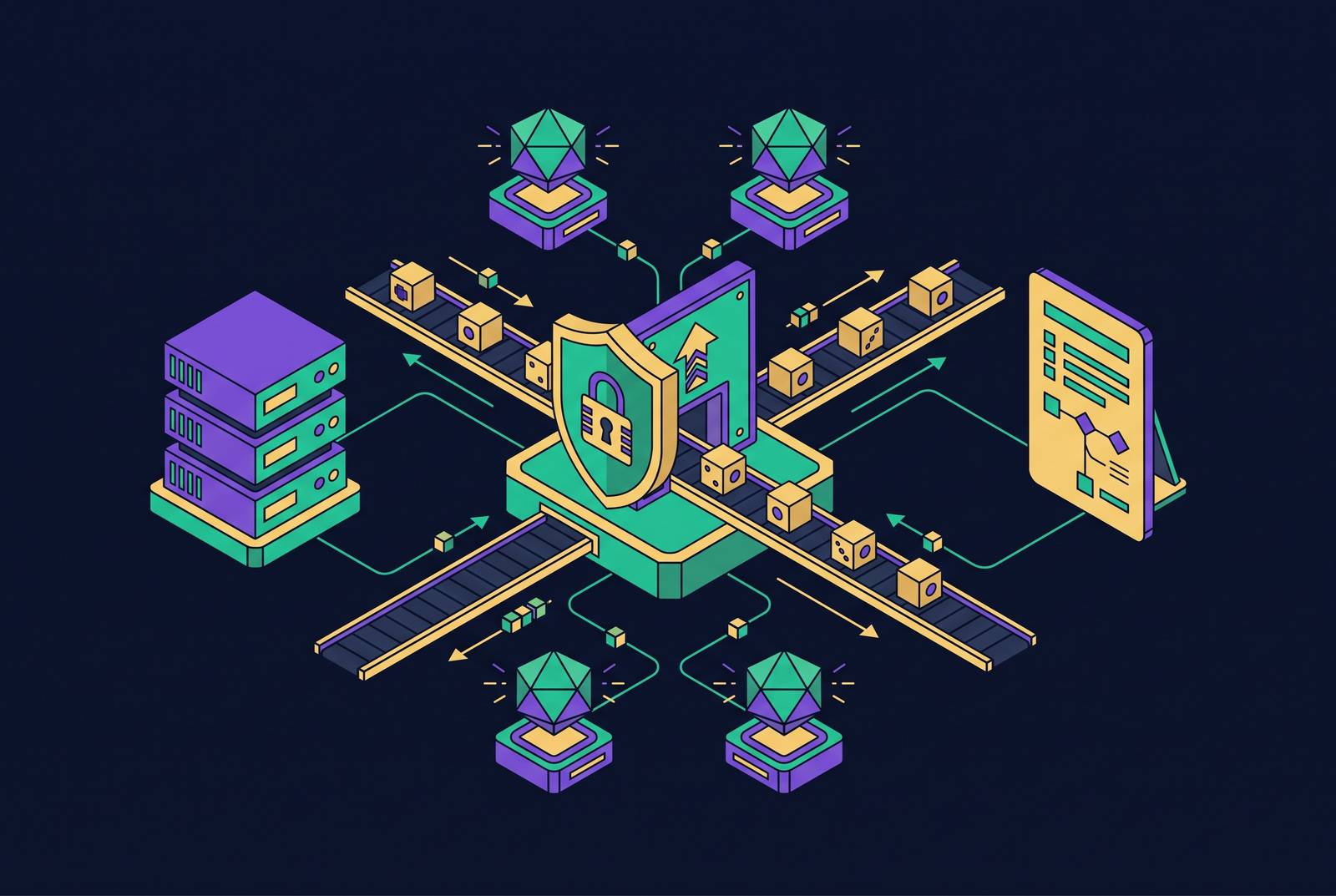
Safe agent data access requires four interlocking controls enforced at the infrastructure layer, not the application layer: least-privilege identity, read-replica isolation, query-time policy enforcement, and data sandboxing. Treat each AI agent as an autonomous workload identity, not a user and not a service account inherited from a human. The emerging model is an identity gateway that performs token exchange and issues short-lived, just-in-time credentials. When the task ends, credentials are rotated and revoked. Long-lived static credentials embedded in config are the structural vulnerability, so lakeFS recommends each agent get its own distinct identity with branch-scoped credentials and least-privilege permissions, and never hold broad standing credentials. Oracle Deep Data Security in Oracle AI Database 26ai implements this with transparent identity propagation: end-user and agent identities, roles, and attributes are relayed to the database at runtime, enabling controlled privilege elevation limited to approved workflows and removing the need for shared high-privilege service accounts.
Route all agent database queries through a centralized gateway that enforces permissions and logs access, and direct analytical queries to read replicas rather than the production database. For Supabase and Postgres teams specifically, adding a read replica is the platform's recommended answer for isolating workloads, but a replica runs the same compute size as the primary and bills separately, plus disk at 1.25× the primary's size. A gateway layer also provides the circuit-breaker and kill-switch capabilities the Five Eyes guidance calls for: a deterministic technical control that can interrupt an agent's access, independent of any verbal or policy instruction.
Attribute-based access control extends governance beyond static roles. Oracle Deep Data Security enforces these policies at the database layer through declarative SQL-native policies that decouple access control from application logic. Policies remain consistent as applications and agents evolve, and developers do not need to reimplement authorization logic in each agent. Central enforcement closes the gap that application-layer control opens.
An agentic data sandbox isolates compute, network access, and data state so agents can query production-scale data without touching the production system. Dreambase operationalizes this for Supabase and Postgres teams through a single MCP server exposing governed Parquet datasets queryable via DuckDB, so agents get fresh context without a pathway to production tables. This is the architectural answer to the Replit case: the protection is not a verbal instruction or a policy document, but a technical boundary enforced by the data layer itself.
Auditability at machine speed: why logging agent behavior requires a different approach
Audit trails for agent workloads are not a compliance checkbox. They are the primary mechanism for detecting governance failures that happen too fast for human review, and they only work if built into the data access layer itself. Human audit trails assume a human can review flagged behavior before damage compounds. The window between a bad query and a cascading failure may be seconds, far shorter than any human-in-the-loop review cycle.
lakeFS identifies data lineage and version control as core components. Version control makes results reproducible, so teams can trace a wrong answer back to stale or incomplete inputs after the fact. Oracle Deep Data Security generates audit records that capture user and agent identity at runtime, so the originating identity survives even when agents act on behalf of end-users, which supports compliance purposes for regulated industries.
Most organizations can monitor what their agents are doing. An agent that queries a column labeled "revenue" using the wrong definition leaves no trace of the semantic error in a standard query log. All of it belongs at the data layer, not the application layer, so the record cannot be bypassed by a different agent or integration.
The Supabase and Postgres context: why this governance gap hits startup teams hardest
If Supabase teams point AI agents or BI tools directly at their production Postgres database, they inherit a specific set of governance and performance failures. Generic enterprise solutions do not address them, and standard Supabase workarounds make them more expensive. Supabase gives teams real Postgres plus auth, storage, realtime, edge functions, and pgvector for AI features in one workspace. It is the default stack for indie builders through Series A startups, and the natural place where agent workloads first appear.
Running AI workloads or BI tools directly against the production Postgres database is a documented trap. Teams inherit RLS friction, pooler limits, JSONB-hostile query patterns, and analytical load on OLTP compute, and the fixes appear on the Supabase bill. One team had product data in Supabase Postgres with key fields buried in JSONB. Five people, five slightly different extraction queries, five slightly different numbers. That is the multiple-definitions-of-the-same-metric failure governance is supposed to prevent, reproduced at the agent layer.
Supabase's own response to agent-related friction is instructive. They released a series of Agent Skills for Postgres Best Practices to teach AI agents how to write better Postgres code, addressing missing indexes on foreign keys, queries that bypass RLS by accident, migrations that lock tables in production, connection pool exhaustion from poorly managed clients, and full table scans hidden behind ORMs. Supabase also introduced Supabase Warehouse, with Hydra and MotherDuck co-developing pg_duckdb, and Analytics Buckets, built on Apache Iceberg and AWS S3 Tables, available in private alpha. The platform itself recognizes that analytical and agent workloads need a different data path than the production Postgres connection.
The read-replica workaround doubles database spend at the same compute size as the primary, billed separately, plus disk at 1.25× primary size. It still does not deliver pre-governed datasets. It moves the same ungoverned tables to a different compute node.
How a governed data layer separates what agents can reach from what humans see
The right governance architecture for agent workloads is not a set of rules applied to the production database. It is a separate, pre-modeled data layer that agents query instead of production, with governance embedded in the data itself rather than enforced at query time against live tables. Starburst's framework identifies three requirements that must work together: federated access, so agents don't need a full data centralization project; a dedicated context layer, a control plane that grounds agents in shared business meaning, table definitions, ownership, freshness, access rules, before they reason; and governance built into the access layer from the start rather than added after an agent is running.
The pre-governed dataset model is concrete. If sales counts upgrades as new MRR and finance counts only net new, no amount of agent access to the production database resolves the disagreement. A governed metrics layer with a single defined calculation resolves it before any agent queries it.
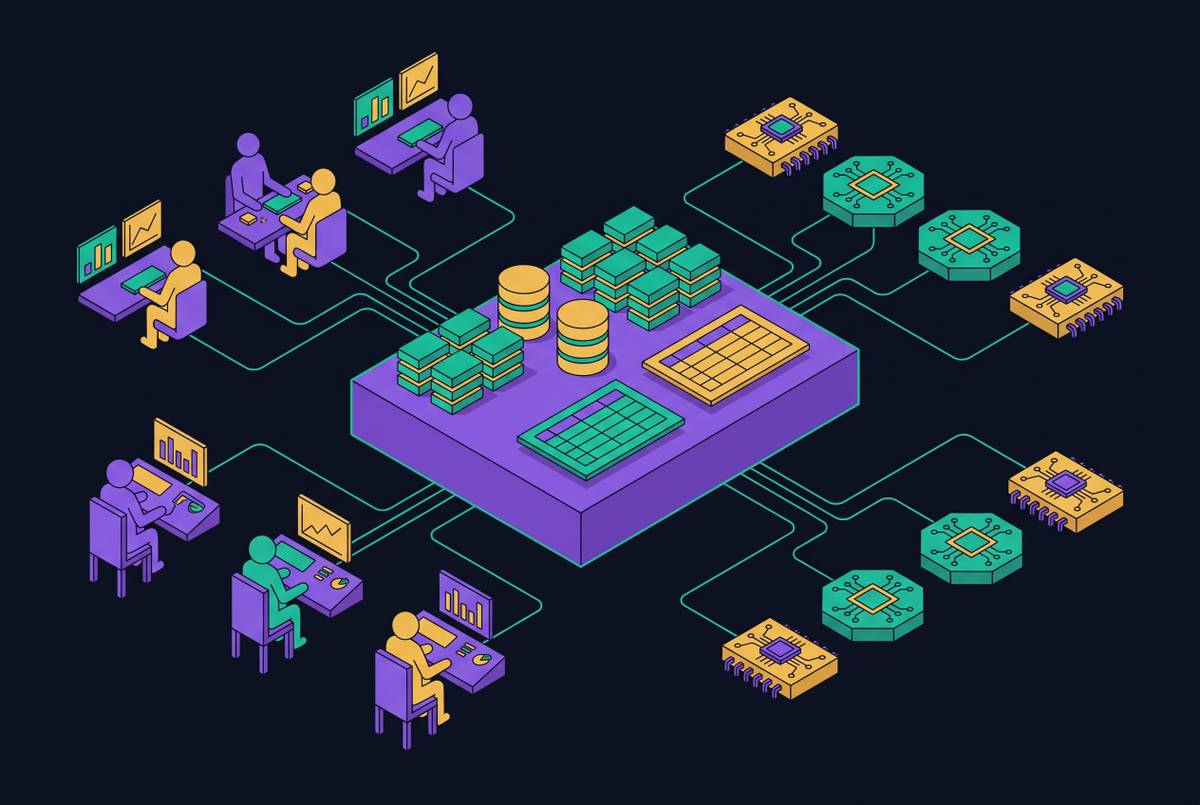
Dreambase implements this pattern specifically for Supabase and Postgres teams. It acts as a shared data layer serving both human teammates and AI agents simultaneously, with pre-calculated metrics, governed datasets, live dashboards, and AI-generated reports, extending Supabase projects into full analytical capability without ETL, schema changes, or new infrastructure. Agents access data through Dreambase's MCP server and can work through governed datasets and pre-calculated metrics, which reduces but does not eliminate contact with the production Postgres instance. This is headless analytics applied to the agent governance problem: data infrastructure decoupled from any single front end and accessible via MCP or API, so the governed layer can serve a dashboard, a Slack report, an inbox summary, and an agent's context window from the same pre-calculated, auditable source.
What a governance policy document for agent workloads actually needs to cover
A governance policy for AI agent workloads must specify not just what agents are allowed to access, but the conditions, identity, scope, duration, and auditability of every access event. Each is a distinct policy dimension, not a single access-control toggle. Every deployed agent must have a verifiable identity and a named purpose, not an inherited user credential or a shared service account. Policy must define which agent identity maps to which task, which data objects are in scope, and what actions are permitted for that task. High-risk actions, any write to a production system, any query touching PII, any cross-system workflow, require human-in-the-loop checkpoints defined in policy before the agent executes, not reviewed after. The Five Eyes guidance frames this as a blast-radius question: the policy must define the maximum damage an agent can cause if compromised or wrong, and technical controls must enforce that ceiling, not policy documents alone.
Policy must specify which data categories each agent class is permitted to process, not just which tables it can reach. Governed datasets pre-apply classification rules. Columns containing PII, payment data, or regulated fields are masked or excluded before the agent ever sees the result, so you do not rely on query-time review of dynamically generated SQL. If a business decision was made on an AI-generated report, the team must be able to reconstruct exactly what data the agent queried and what definition it applied.
Policy must define a deterministic mechanism to revoke an agent's access, not a verbal instruction, not a Slack message, one that functions independently of the agent's own code or runtime. Circuit breakers for unbounded consumption, cost caps, query count limits, rate limits, must be technical controls specified in the policy, with named ownership of who activates them. Shadow AI remains. Team members deploy personal AI tools, browser extensions, personal ChatGPT projects, developer-installed coding agents, that access or reproduce production data outside IT oversight. Policy must define what constitutes a sanctioned agent deployment and what the escalation path is when an unsanctioned one is discovered. Policies that are not enforced architecturally, at the data layer, not just in a document, are verbal instructions. The Replit case shows what verbal instructions are worth.