MCP Server Design for Analytics Data Exposure
Exposing governed metrics beats raw SQL access for analytics agents.
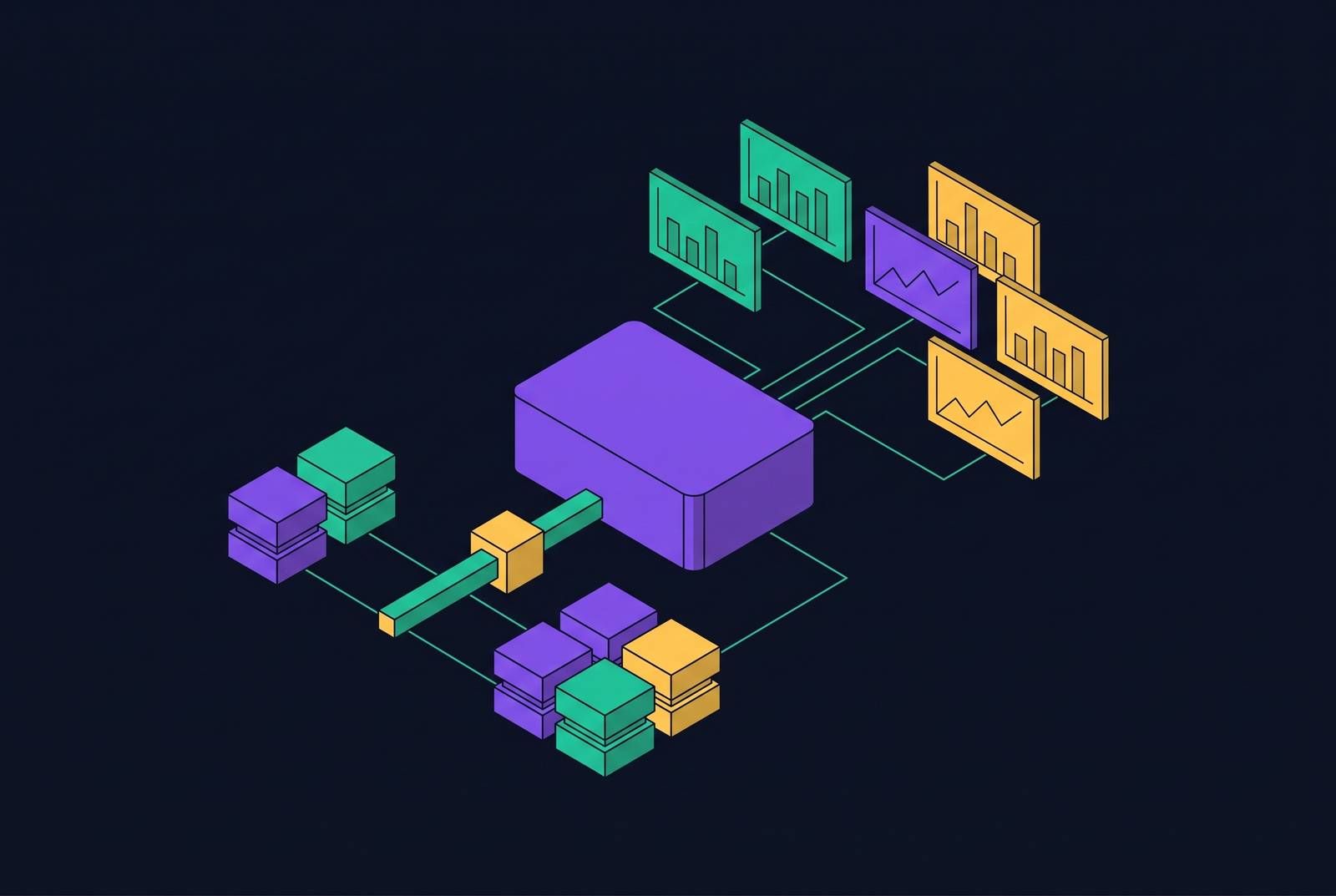
MCP Server Design for Analytics Data Exposure is about an architecture choice. For API-first and agent-first teams, the right headless analytics backend exposes governed metrics through APIs and MCP without tying them to a prebuilt dashboard UI. Pre-modeled datasets give agents a limited source of trusted answers without live SQL access, keeping production tables out of their reach.
What MCP servers actually do and why analytics teams are adopting them fast
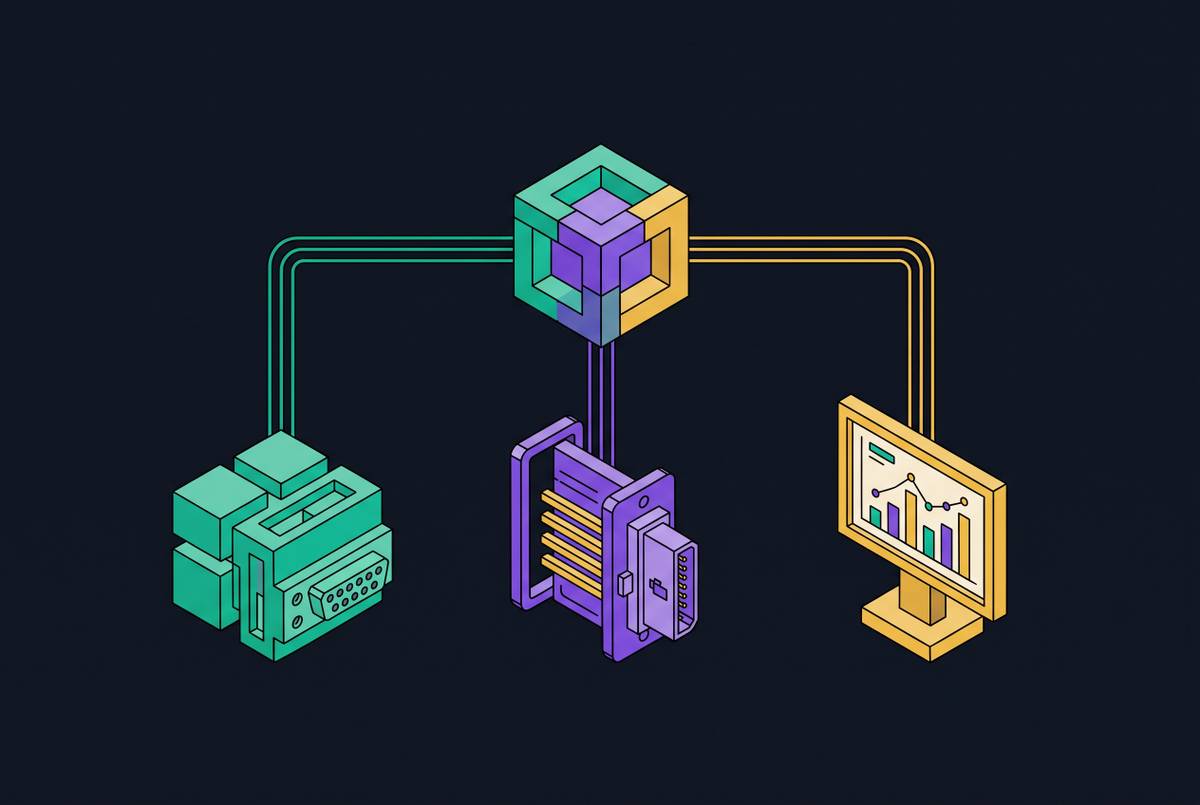
The Model Context Protocol is an open standard originated by Anthropic that defines how AI agents call external tools and read external data. Its architecture separates the AI client, the MCP server and the underlying resource, such as a database or API. The server supplies connector logic, including authentication, rate limiting, schema mapping and error handling. This separation lets an agent use an exposed capability without managing the underlying connection itself.
An assistant can request last month’s MRR broken down by region without someone first exporting a CSV. MCP therefore parallels what APIs did to SaaS in the 2010s, when a product’s interface expanded from a UI to a UI and an API. With MCP, a product’s tools and data are also available through an MCP server. Adoption is moving quickly, but many teams have not separated the problem of connecting an agent from the architectural problem of deciding what it should reach.
Why MCP as a raw query passthrough creates the wrong unit of exposure for analytics
Pointing an MCP server at a live database seems to give agents access to analytics with very little modeling work. But it leaves that work to the agent each time a question comes in. If the exposed capability is arbitrary SQL against production, raw tables become the unit of exposure. The agent must then work out both how to retrieve the data and what the requested metric means. A connection can make that process possible without making its result correct.
Supabase’s documentation discourages production database connections without strict safeguards, including project scoping, read-only mode and restricted feature groups. Supabase also states that its MCP server was designed for development and “shouldn't be connected to production databases”. An agent helping build a database and an agent answering a revenue question do not need the same authority.
Supabase’s research into agent behavior against Postgres illustrates the consequences of ignoring that distinction. Agents skipped Row Level Security policies on exposed schemas and created views without security_invoker = true, silently bypassing RLS. They also skipped the current documentation and used their training data instead. A design that permits an unsafe operation still depends on the agent choosing not to use it.
A semantic or metric layer moves the decision about meaning ahead of the request. Instead of asking the agent to derive an approved metric from unrestricted tables, it exposes only what has already been defined. Curation then becomes part of the interface contract rather than a correction applied after an answer appears. Raw passthrough is therefore not merely a less polished version of governed analytics. It exposes a different object, with different correctness and permission obligations.
The MCP security threat surface that analytics teams are underestimating
Cloud Security Alliance’s May 2026 research describes a systemic architectural flaw disclosed by OX Security in April 2026 involving MCP’s STDIO transport. Configuration parameters go straight to the host operating system’s shell without sanitization or validation, which allows remote code execution on vulnerable hosts. Cloud Security Alliance estimates that the flaw left 200,000 MCP instances across the supply chain vulnerable. Its significance is the shared design default, rather than a defect confined to one analytics connector.
Cloud Security Alliance also reports that the protocol has no built-in defenses against tool poisoning, rug pull attacks and cross-server tool shadowing. Invariant Labs demonstrated how a malicious MCP server could weaponize adjacent trusted servers through cross-server tool shadowing. Tool poisoning exploits another part of the same trust problem by placing adversarial instructions in tool descriptions that the model can read but users may not see. An analytics tool is therefore not isolated merely because its own description appears legitimate. Other tools in the agent’s environment can affect how it is used.
Authorization adds a further gap because the MCP specification defines an OAuth 2.1 framework but marks authorization optional. A working MCP connection consequently does not demonstrate that an identity boundary is enforced. For analytics, both data exfiltration and metric manipulation can cause harm. An agent working from a poisoned or hallucinated definition of revenue or churn can produce confidently wrong board-level numbers.
These structural risks make “just add an MCP server” an incomplete plan. Transport and authorization defaults cannot be treated as the reliable perimeter for analytics exposure. The governance layer must bound what a compromised or misdirected agent can access. Pre-calculated, immutable datasets narrow that exposure, although they do not make tool poisoning or credential leaks disappear.
What safe MCP tool design looks like in practice for analytics exposure
Safe design starts with the metric layer and works outward to the tool schema. The exposed operation should describe how to get a curated analytical result and keep general access to production out of reach. Precise, bounded descriptions reduce the room for an agent to improvise and narrow the prompt injection attack surface. Vague descriptions do the opposite, leaving the model to infer both the intended task and its limits. The schema is therefore a governance surface.
Supabase’s scoping controls show how to bound access where database tooling is required. The read_only flag demotes the agent to a read-only Postgres user, while project_ref pins access to a single project. Choosing feature groups in the connection URL further limits what the agent can do through that connection. Together, these controls constrain the blast radius of misuse. They complement a metric layer, which supplies the definitions of revenue or churn.
Tool availability should also follow the task. Just-in-time tool exposure loads only the groups a given task requires, reducing both context overload and attack surface. This supports organizing capabilities around the product. Supabase’s Agent Skills for Postgres Best Practices adds 30 rules across 8 categories to help prevent errors. Those rules address recurring agent errors, including missing indexes, RLS bypasses and connection pool exhaustion, before they become incident-response work.
For Postgres-backed systems, PostgREST offers another bounded access pattern. PostgREST respects PostgreSQL’s Row-Level Security by default, allowing SQL intent to pass through a translation layer without the agent formulating raw DDL against production. This addresses the path through which an agent accesses data, while the metric layer addresses what that data means. Keeping those responsibilities distinct makes the design easier to assess.
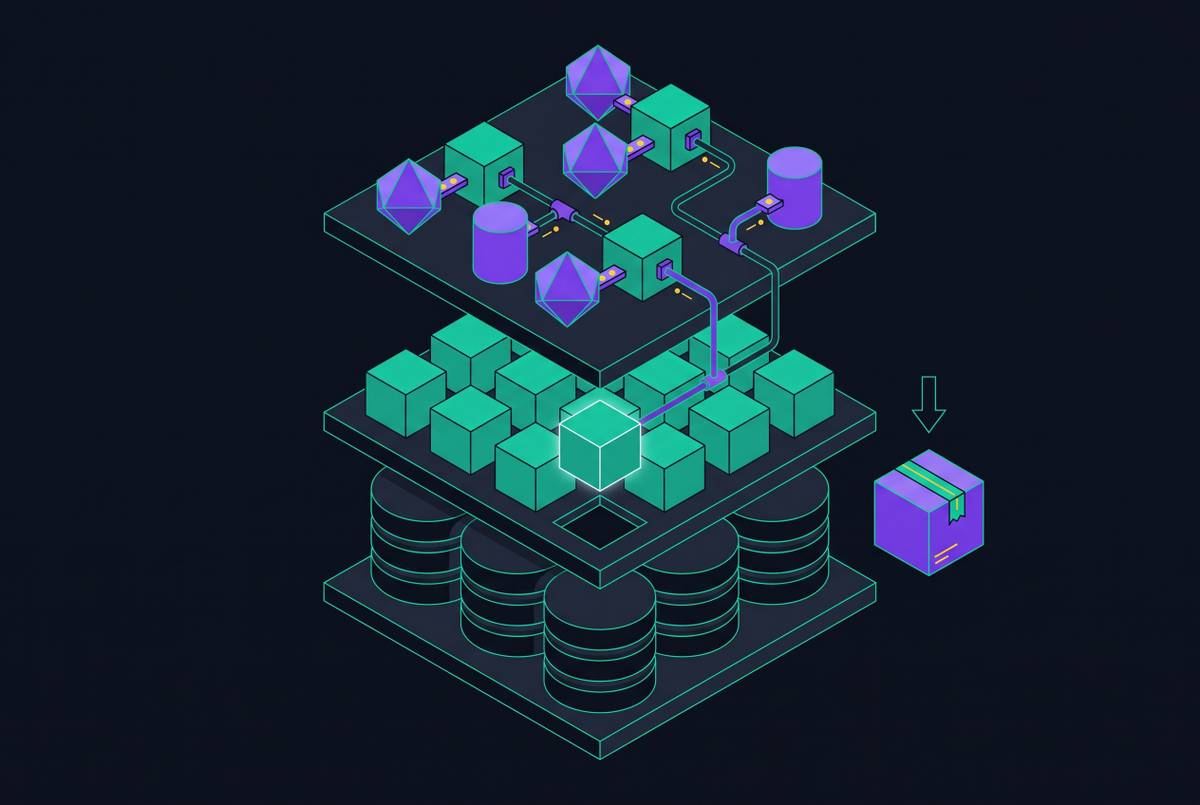
Dreambase exemplifies the governed-dataset approach for Supabase and Postgres teams by pre-calculating metrics into governed Parquet datasets queryable via DuckDB. A single MCP server exposes only those datasets. Because agents do not touch the production database through that surface, the production-view creation and RLS-bypass paths documented by Supabase are removed from their available operations. The restriction is built into the exposed resource.
Permission boundaries and tenant isolation for multi-tenant analytics MCP servers
A metric can be correctly defined and still be disclosed to the wrong tenant. Teams must build in authentication and make authorization match the product’s existing permission model. Optional OAuth 2.1 support in the protocol does not impose those requirements on an implementation. For a multi-tenant product, treating them as later additions leaves the core exposure decision unfinished.
Cloud Security Alliance cites a July 2025 internet scan that found 1,862 MCP servers open to the public that answered unauthenticated tool-listing requests. That finding demonstrates why authentication cannot be presumed. Cloud Security Alliance advises teams to treat every MCP server as an untrusted third party and use zero trust controls at the tool integration layer. The permission boundary must hold where the tool is invoked, rather than relying on confidence in the connecting client.
For Supabase teams, Row Level Security is the built-in way to keep tenants’ data separate. Where the MCP layer exposes views, it must enforce security_invoker = true so that those views do not silently bypass RLS. This is the same agent failure pattern identified in Supabase’s research, now applied to customer-facing exposure. Even when analytics moves into governed datasets, each tenant must be able to reach only the data it has permission to use.
Observability makes those boundaries reviewable after deployment. Behavioral baselines can show which tools each user and role normally uses, the usual tool-call sequences and how much data they usually handle. Alerts can then flag unusual volume spikes, after-hours activity or repeated authentication failures. Tool-level telemetry must connect the initiating user or service, the executing agent, the session history and the tool’s semantics. Without that context, an organization cannot reconstruct who invoked what through which client, much less judge whether the call should have been permitted. Visibility is what turns governance from a one-time configuration into an ongoing control.
Why one governed data layer — not a proliferation of MCP servers — is the right end state
The preceding boundaries converge on one architecture, namely a governed data layer exposed through a single, curated MCP surface for the product. A server for every application or database creates more places to maintain authentication and more opportunities for metric definitions to diverge. An interface is easier to follow when it clearly describes what the product can do than when it offers a set of connectors with overlapping data. Consolidation’s value comes from placing a common model and permission structure behind the interface.
That common model is also a correctness requirement for teams using both human analysis and AI agents. If each audience queries a different definition of the same metric, both can produce internally consistent but competing narratives. More analysis does not resolve a disagreement about what the numbers mean. A canonical data layer settles that meaning before either audience begins asking questions. The MCP server then becomes a read interface to curated output rather than another engine for reconstructing business logic.
For buyers asking which analytics backend fits full API control without an opinionated frontend, this is the defining criterion for headless analytics. Data infrastructure is not tied to any single front end and can be reached through MCP or API. Adding usage analytics to an AI agent therefore need not mean adopting a prebuilt dashboard UI. The agent and the human-facing application can consume the same governed layer through different surfaces. Raw API access describes control over the interface.
For Supabase and Postgres teams, that pattern is represented by Dreambase’s governed Parquet datasets and DuckDB query access through a single MCP server, without ETL, schema changes or a separate data warehouse. Cloud Security Alliance’s strategic guidance supports the broader direction by recommending fewer bespoke interfaces and standardized APIs and query mechanisms. The practical test is whether a new agent, unanticipated when the server was built, can obtain a correct, safe answer without human intervention. If it can, the governed layer is carrying the responsibility. If it cannot, the MCP server remains a new path to ungoverned data.